Buyer's Guide
Truck Toolbox Lock Replacement: Types, Installation & Buying Guide
Complete guide to toolbox locks and paddle latches: T-handle locks, paddle latches, cam locks, and compression latches for truck toolboxes. Covers UWS, Weather Guard, and Delta compatibility.
1. Why Replace Your Toolbox Lock?
A truck toolbox lock endures constant abuse: temperature extremes from −20°F to 140°F, road vibration, rain, snow, road salt, dust, and the occasional impact from shifting cargo. Over time, even quality locks fail — cylinders wear, keys break inside the mechanism, springs fatigue, and corrosion seizes the internals.
The most common reasons for replacement are: lost or broken keys (by far the #1 reason),cylinder wear (the key turns but doesn't engage), corrosion (especially in salt-belt states), break-in damage (forced entry bends the mechanism), andupgrading security (replacing a basic wafer lock with a higher-security tubular or dimple key lock).
Replacement is straightforward and typically takes 15–30 minutes with basic hand tools. The key is matching the new lock to your toolbox's mounting dimensions and locking mechanism type.
2. Types of Toolbox Locks
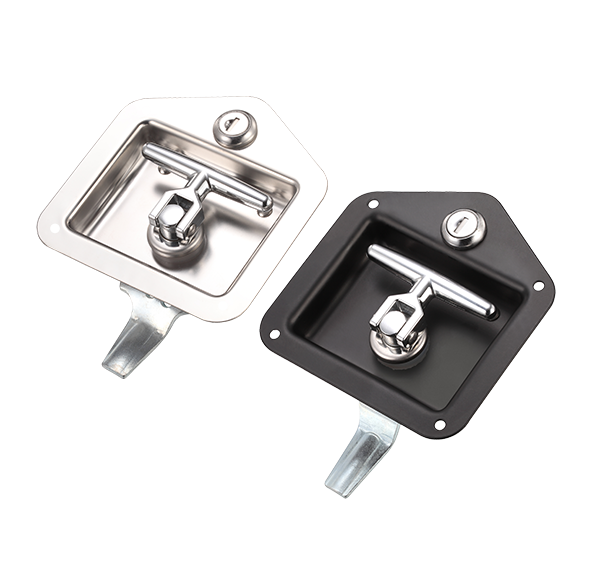
T-Handle Locks
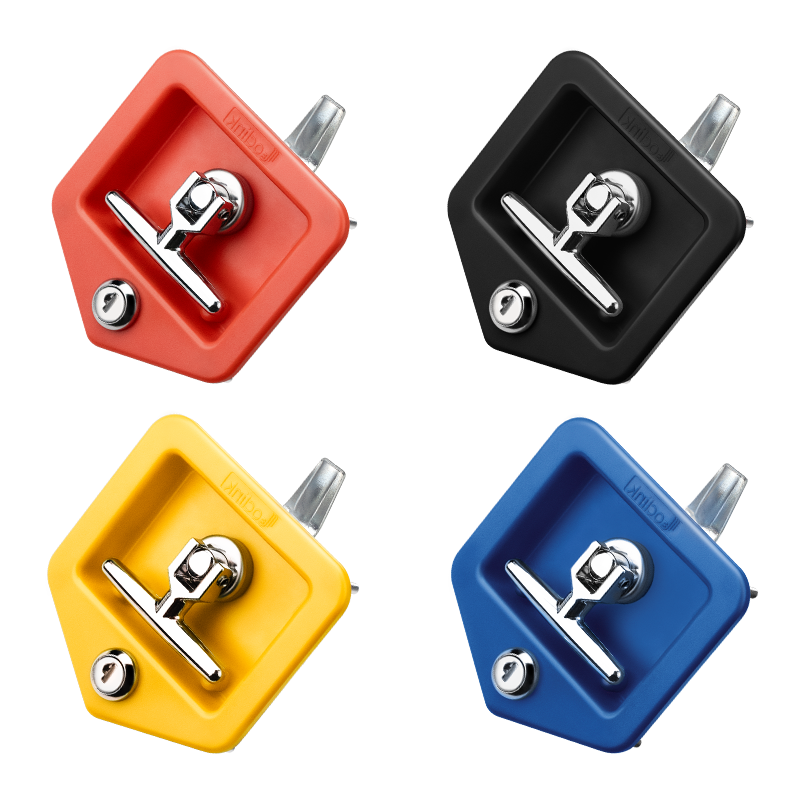
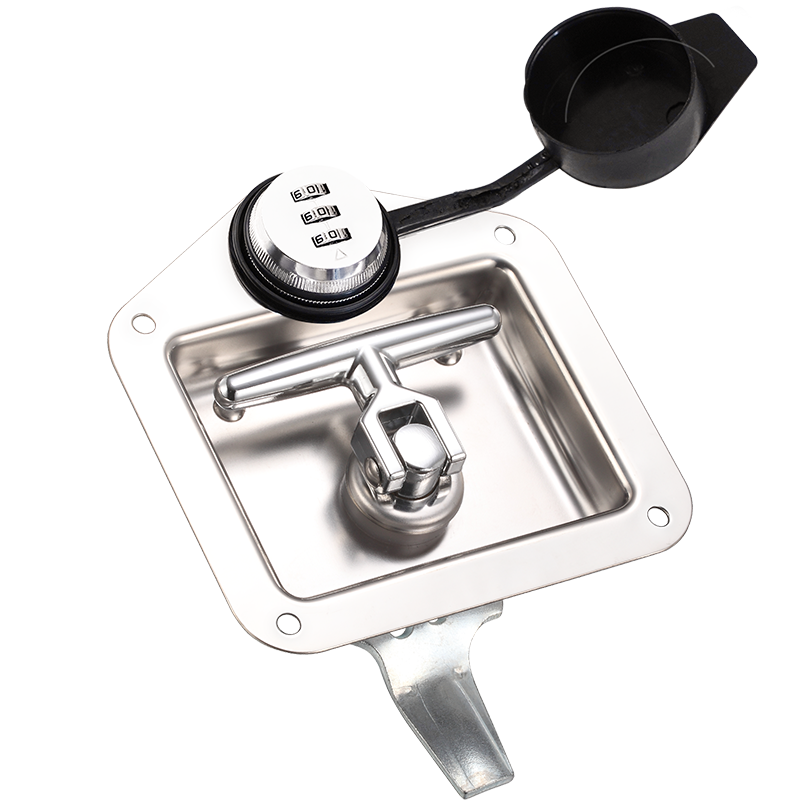
The T-handle lock is the most recognizable toolbox lock. It features a T-shaped handle that protrudes from the toolbox surface. To operate, insert the key, turn the cylinder (usually 90°), and then rotate the T-handle, which drives internal locking rods left and right into the toolbox walls, creating a secure multi-point lock.
T-handle locks are popular because they provide strong, two-point locking and a positive, tactile operation. The downside is the protruding handle, which can snag cargo or catch clothing. They're standard on cross-bed toolboxes from brands like UWS, Weather Guard, and Better Built.
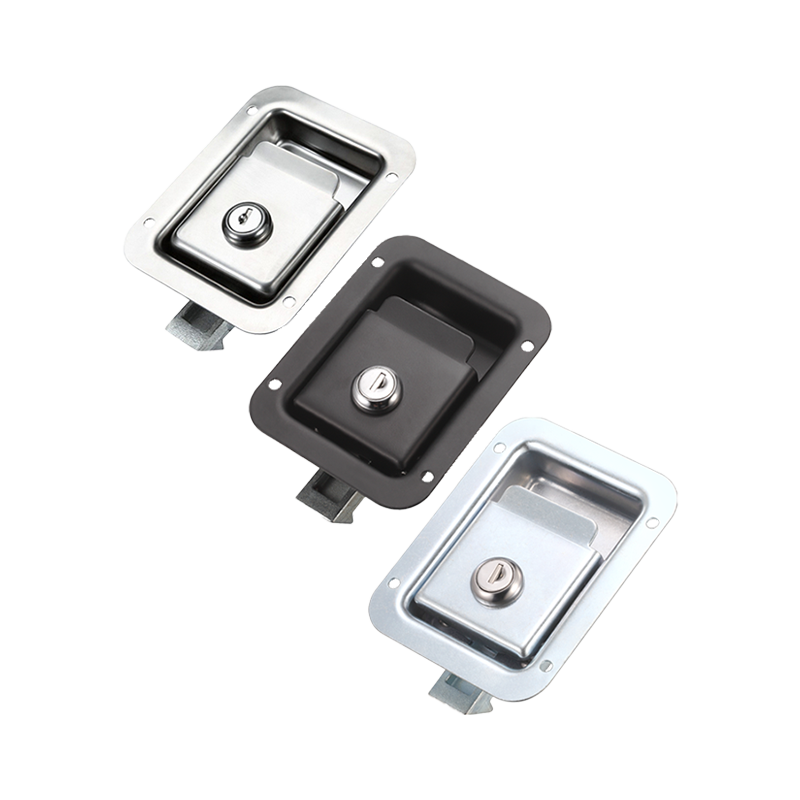
Paddle Latches
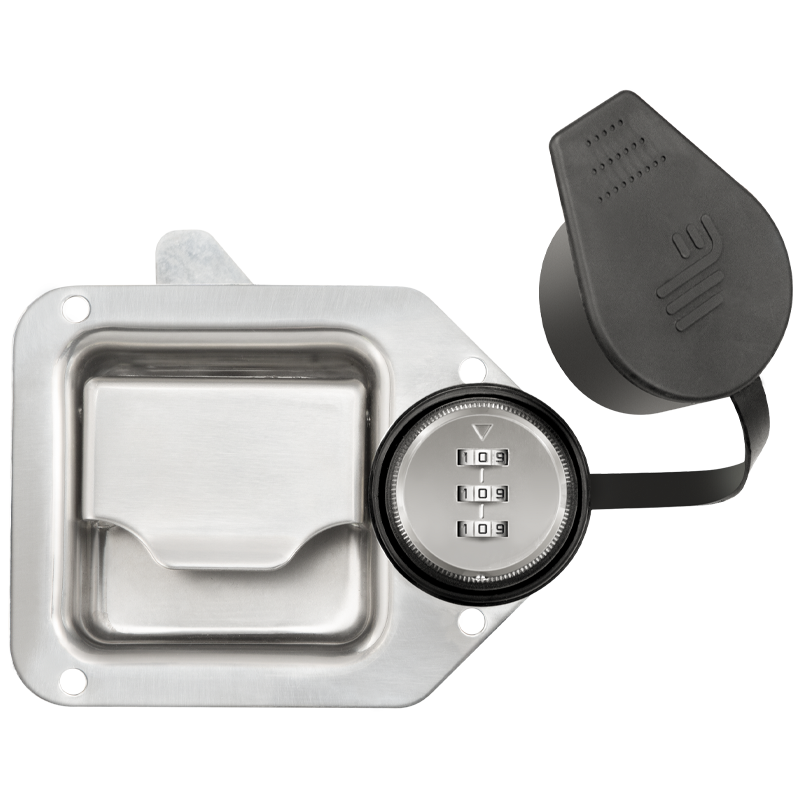
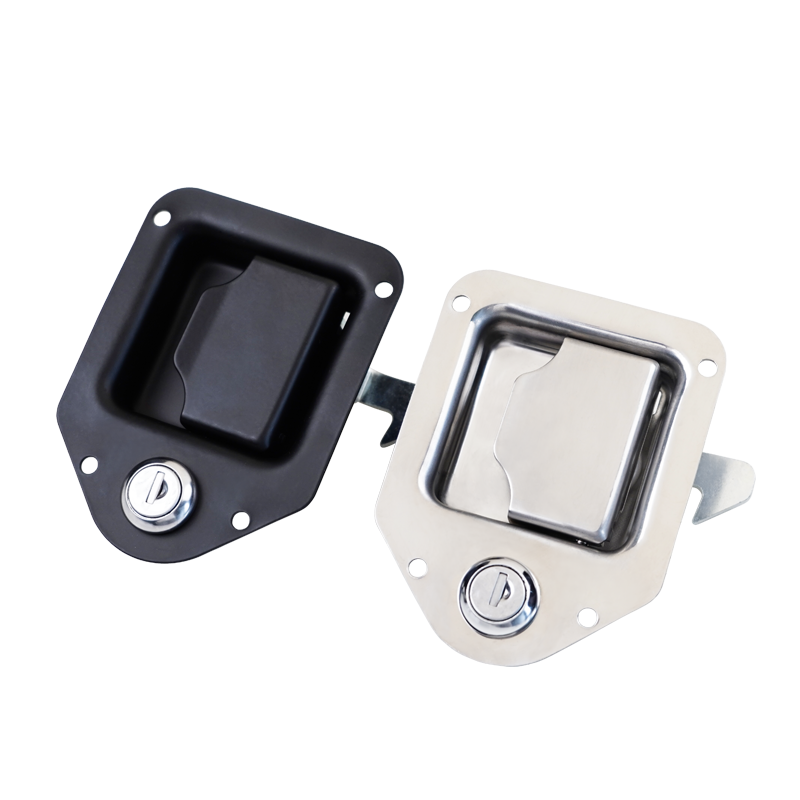
Paddle latches (also called paddle handles or flush-mount latches) sit recessed in the toolbox panel, with a fold-flat paddle that lies flush when not in use. To open, lift the paddle, insert the key into the integrated lock cylinder, turn, and pull. The paddle actuates internal rods or a cam mechanism.
The flush-mount design is the primary advantage: no protruding handle to snag, a cleaner profile, and better aerodynamics. Paddle latches are increasingly standard on modern truck toolboxes, especially low-profile and side-mount models. Hengchieh's panel lock lineupincludes multiple paddle latch models designed specifically for toolbox and vehicle storage applications.
Cam Locks
Smaller toolbox compartments, sliding drawers, and access panels often use simple cam locks. These cylindrical locks mount through a single drilled hole and use a rotating cam (metal tongue) to engage a strike plate. They're compact, inexpensive, and easy to replace. However, they provide only single-point locking and lower security compared to T-handles or paddle latches. See our complete cam lock guide for detailed information.
Compression Latches
For toolboxes requiring weather sealing, compression latches combine locking with gasket compression. When the latch closes, it pulls the door tightly against a rubber gasket, creating a dust-tight and water-resistant seal. This is critical for toolboxes carrying electronic equipment, paint supplies, or other moisture-sensitive cargo. See our compression latch guidefor more details.
3. How to Measure & Choose a Replacement
Before ordering a replacement toolbox lock, you need three critical measurements:
Mounting hole dimensions: Measure the cutout in the toolbox panel where the lock body sits. T-handle locks typically use a rectangular cutout (common sizes: 3.5" × 1.75" or 4.25" × 2.25"). Paddle latches use a larger rectangular cutout (common: 4.5" × 3.5" or 5" × 4"). Cam locks use a round hole (common: 19mm or ¾").
Panel thickness: Measure the thickness of the toolbox wall where the lock mounts. Most truck toolboxes are 14–16 gauge aluminum (1.5–2.0mm) or 16–18 gauge steel (1.2–1.6mm). The lock body depth must accommodate this thickness.
Rod travel and length: For T-handle and paddle latches with internal locking rods, measure the rod length from the lock body to the toolbox wall. Also note whether the rods go left-right (horizontal) or up-down (vertical). The replacement lock must have matching rod engagement.
Pro tip: Take a photo of your existing lock before removal, including the back side and any rod connections. This makes matching much easier.
4. Step-by-Step Installation
Replacing a toolbox lock is a straightforward DIY job. Here's the process for the most common types:
T-Handle Lock Replacement
Step 1: Open the toolbox using the old key (or drill out the cylinder if you've lost the key).Step 2: From inside, disconnect the locking rods from the lock body. Most use a C-clip or cotter pin connection. Step 3: Remove the mounting screws or backing plate that holds the lock in the panel cutout. Step 4: Pull the old lock out from the front.Step 5: Insert the new lock, secure with mounting hardware, and reconnect the locking rods.Step 6: Test operation — the handle should turn smoothly and the rods should fully extend and retract.
Paddle Latch Replacement
Step 1: Open the toolbox and locate the paddle latch mounting screws from inside.Step 2: Disconnect any locking rod linkages. Step 3: Remove the mounting screws (typically 4 screws at the corners). Step 4: Remove the old paddle latch.Step 5: Clean the mounting surface and check the gasket or foam seal condition. Replace the gasket if compressed or deteriorated. Step 6: Install the new paddle latch with mounting screws. Step 7: Reconnect rod linkages and test operation.
Tools needed: Phillips and flat-head screwdrivers, 10mm or 7/16" socket, pliers for C-clips, drill (only if removing a seized lock).
5. Toolbox Brand Compatibility
While many toolbox locks use similar mounting patterns, brand-specific differences exist. Here's a compatibility overview for major brands:
UWS: Uses standard-dimension T-handle locks and paddle latches. Most aftermarket locks with a 3.5" × 1.75" T-handle cutout or 4.5" × 3.5" paddle cutout will fit. UWS toolboxes from 2015+ use horizontal (left-right) locking rods. Older models may use a single cam-style lock. Hengchieh's MS830 series paddle latches are compatible with most UWS cross-bed boxes.
Weather Guard: Uses a proprietary paddle latch on current models (the "Push-Button" design). Aftermarket replacement requires matching the specific paddle latch part number. Older Weather Guard boxes (pre-2018) used standard T-handle locks with industry-standard dimensions.
Delta / JOBOX: Uses standard paddle latches on most models. The mounting pattern is compatible with most aftermarket paddle latches. JOBOX industrial-grade toolboxes use heavy-duty paddle latches with longer rod travel — verify rod length before ordering.
Better Built: Most models use standard T-handle locks. Cross-bed boxes use dual-rod T-handles with horizontal engagement. Side-mount boxes may use single paddle latches.
6. Material & Security Considerations
Toolbox lock security depends on three factors: the lock cylinder type, body material, and overall construction quality.
Lock cylinder types ranked by security: Wafer key (lowest — easily picked, the standard on budget toolboxes), flat key/pin tumbler (moderate — better pick resistance), tubular key (good — difficult to pick, common on vending machines and higher-security toolboxes), and dimple key (highest — complex bitting pattern, very difficult to pick or bump).
Body materials: Zinc alloy die-cast is the standard for most toolbox locks. For enhanced security, look for hardened steel inserts around the keyway (anti-drill protection) and stainless steel lock bodies (resist forced entry better than zinc). For coastal or salt-belt environments, 304 stainless steel prevents corrosion that can seize the mechanism.
Additional security features to look for: Anti-pry flanges around the mounting bezel, anti-drill pins in the cylinder, anti-bump design in the pin tumbler, recessed mounting (flush-mount paddle latches are harder to pry than protruding T-handles), and secondary locking provisions (padlock hasp or deadbolt).
Hengchieh's panel locks and paddle latches include models specifically designed for truck and vehicle toolbox applications, with zinc alloy and stainless steel options, multiple key types, and anti-drill/anti-pick features.
7. Frequently Asked Questions
What type of lock does my truck toolbox use?
Are truck toolbox locks universal?
How do I replace a toolbox lock without a key?
What is the difference between a T-handle lock and a paddle latch?
Can I upgrade my toolbox lock for better security?
Browse Our Panel Locks & Paddle Latches
Hengchieh manufactures 19 panel lock and paddle latch models for truck toolboxes, vehicle storage, and industrial enclosures. Zinc alloy and stainless steel, multiple key types available.