Buyer's Guide
Cam Locks for Cabinets & Furniture: How to Choose the Right Lock
How to choose cam locks for cabinets, drawers, file cabinets, desks, and furniture. Types, sizes, keying options, and installation tips from a manufacturer with 75+ cam lock models.
1. Why Cam Locks Are the Standard for Cabinets
Walk into any office and open a filing cabinet, desk drawer, or supply closet — the lock you'll find is almost certainly a cam lock. There's a reason for that dominance. Cam locks are compact enough to fit in the thin metal panels of standard cabinets (typically 0.8-2mm steel), simple enough to install in a single pre-punched hole, and reliable enough to last the life of the furniture.
For cabinet manufacturers and office furniture brands, cam locks offer an unbeatable combination of low unit cost, easy assembly-line installation (just drop in and tighten one nut), and enough customization options (keying systems, cam shapes, finishes) to differentiate product lines. For end users, they provide the everyday convenience of one-key access to stored items without the bulk of a padlock or the complexity of a digital lock.
If you're reading this, you're likely in one of two situations: you need to replace a worn-out or lost-key cam lock on existing furniture, or you're sourcing cam locks for a cabinet manufacturing or fit-out project. Either way, this guide covers everything you need to know.
2. Cabinet Types & Which Cam Lock Fits
Filing Cabinets
Standard vertical and lateral filing cabinets almost universally use 19mm (¾") body diameter cam locks with flat key cylinders. The lock mounts through a pre-punched hole in the front face, and the cam (usually a hook cam) engages with a vertical locking bar that runs the height of the cabinet, securing all drawers simultaneously. When replacing a filing cabinet lock, matching the body diameter and cam type is more critical than the brand — most filing cabinet locks are interchangeable if the dimensions match.
Office Desks & Pedestals
Desk pedestals (the drawer units under or beside a desk) use cam locks similar to filing cabinets but often with shorter body lengths since the panel is thinner. Many modern pedestal locks use a central locking mechanism where one cam lock controls a rod system that secures multiple drawers. If you're replacing a pedestal lock, check whether it's a standalone cam lock or part of a rod-operated system — the mounting interface differs.
Kitchen Cabinets
Kitchen cabinet locks serve a different purpose than office locks — they're primarily for child safety or to restrict access in shared living situations, not high-security storage. Kitchen cabinet cam locks are typically smaller (16mm body diameter), use simple wafer cylinders, and come in finishes that match kitchen hardware aesthetics: brushed nickel, matte black, or polished brass. Since kitchen cabinet doors are often made from MDF, plywood, or solid wood (12-18mm thick), you'll need a longer body length than for steel office cabinets.
Storage & Utility Cabinets
Metal storage cabinets in workshops, garages, and schools use cam locks that prioritize durability over aesthetics. These are typically 19mm or 22mm body diameter, zinc alloy or stainless steel, with chrome or powder-coated finishes that resist scratches and chemicals. For outdoor storage cabinets or those in humid environments, 304 stainless steel cam locks are worth the premium — a corroded zinc lock on an otherwise functional cabinet is frustrating and expensive to deal with at scale.
Display Cases & Retail Fixtures
Glass display cases in retail, museums, and jewelry stores need cam locks that are both secure and discreet. Glass-door display cases commonly use cam locks with a 16mm body diameter and a short straight cam that doesn't protrude far behind the glass. Low-profile satin chrome or matte black finishes complement glass aesthetics. For high-value displays, tubular key cam locks provide better pick resistance than standard flat-key models.
Server Racks & IT Cabinets
Data center and server room cabinets are a specialized use case — security requirements are higher, and locks often need to integrate with access management systems. Basic server rack cam locks use standard cylinders, but many facilities are moving to electronic cam locks that can be remotely monitored and audited. If you're sourcing for IT infrastructure, consider whether your security policies require key tracking, audit trails, or electronic access control.
3. How to Measure & Size Your Cam Lock
Getting the right cam lock size is straightforward once you know what to measure. Three dimensions determine compatibility:
Body Diameter
This is the most critical measurement. The body diameter must match the mounting hole in your cabinet panel. Measure the existing hole (or the old lock's body) with calipers. Standard sizes for cabinet applications are 16mm (⅝"), 19mm (¾"), and 22mm (⅞"). The 19mm size covers about 70% of office and commercial cabinet applications.
Body Length (Usable Length)
The body length must extend through the full panel thickness plus leave enough thread for the mounting nut (typically 3-5mm). For thin steel cabinet doors (0.8-2mm), standard 16-20mm body lengths work. For wood or composite panels (12-18mm), you need 25-30mm. For thick doors (18-25mm), extended-length models are available. Always err on the longer side — you can add a spacer washer, but you can't extend a too-short body.
Cam Type & Length
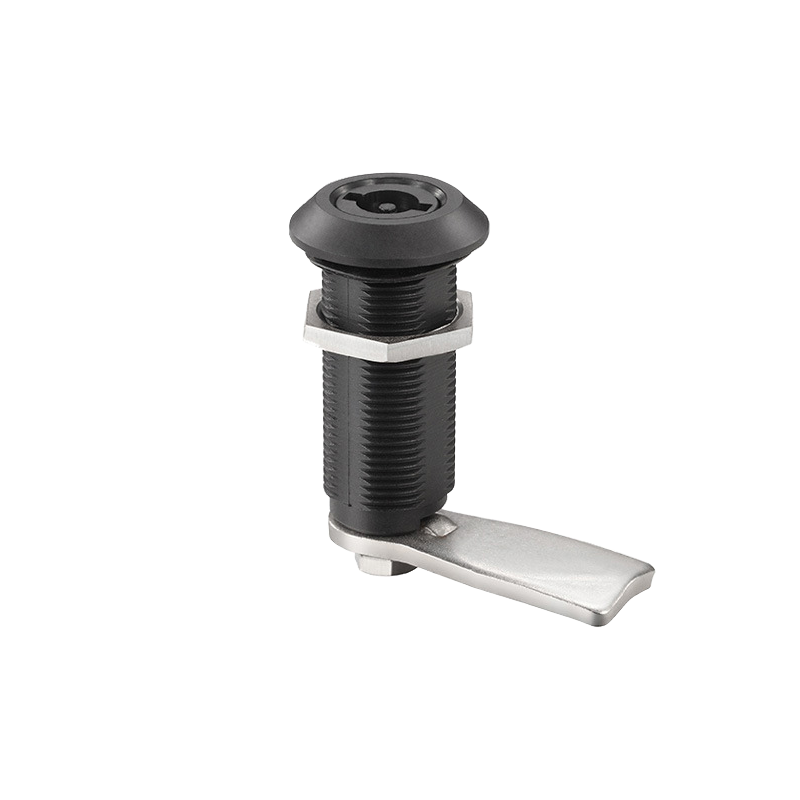
The cam is the metal tongue that does the actual locking. Common types for cabinet applications include straight cams (most common, extends straight back), offset cams (bent at an angle, for doors that aren't flush with the frame), and hook cams (hooks around a bar or bracket, used in filing cabinet locking systems). Cam length is measured from the center of the lock body to the tip — typically 20-35mm for cabinets. When in doubt, order a lock that comes with multiple cam options so you can test on-site.
4. Key Types & Security Levels
Not all cam lock cylinders are equal. The key type determines both security level and cost:
Flat Key (Standard Wafer)
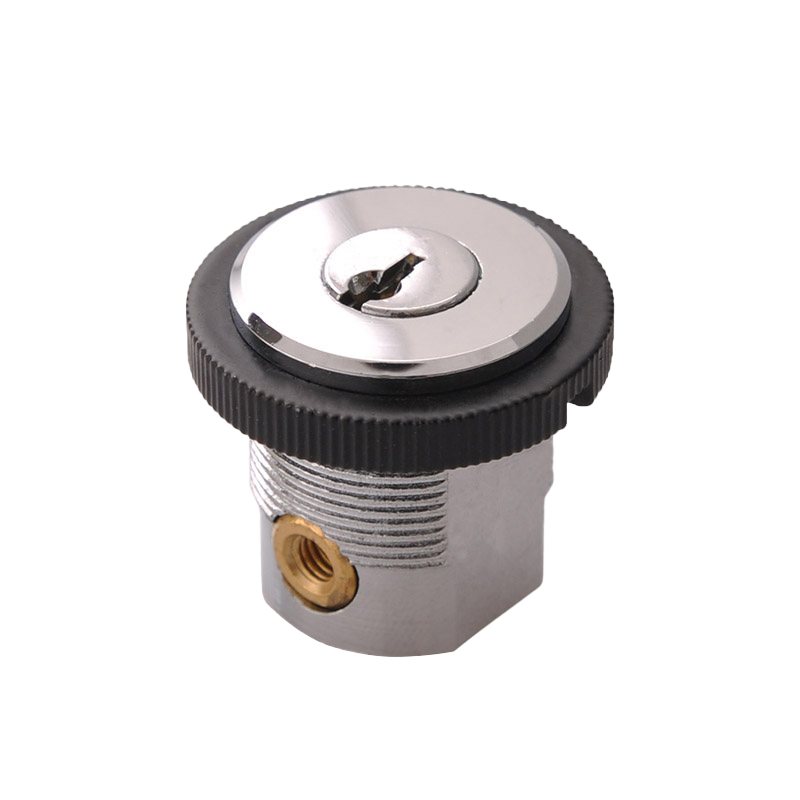
The most common and affordable option. Uses a flat key similar to a small house key, with a disc wafer mechanism inside the cylinder. Security level is basic — these locks deter casual access but won't stop a determined intruder with tools. Perfect for office file cabinets, desk drawers, and storage closets where the goal is organizational control rather than high security. Most replacement cam locks use this type.
Tubular Key
Uses a round, hollow key with pins arranged in a circle. Significantly harder to pick than flat-key locks. Common on vending machines, coin-operated equipment, and higher-security cabinets. If you're securing medication, cash boxes, or sensitive documents, tubular key cam locks are the recommended upgrade from standard wafer cylinders. Cost is typically 30-50% more than flat key models.
Dimple Key
Uses a flat key with cone-shaped dimples rather than traditional cuts. Offers high security with complex bitting patterns that are difficult to duplicate without the original key card. Used in high-end office furniture and situations where key control is important (preventing unauthorized key copies).
Keyless / Tool-Operated
Some cabinet cam locks are operated with a screwdriver, Allen key, or proprietary tool instead of a traditional key. These are useful for panels that only maintenance staff should access — electrical junction cabinets, HVAC control panels, and utility compartments. Since there's no key to lose and the "key" (a common tool) is always available, these simplify maintenance workflows while still preventing casual access.
5. Keying Options for Multi-Cabinet Setups
When you're buying cam locks for more than one cabinet — whether it's an office fit-out, a school, or a manufacturing facility — the keying configuration is as important as the lock itself.
Keyed Alike (KA)
All locks in the order open with the same key. This is the most popular option for facilities where one manager or team needs access to all secured cabinets. For example: 20 filing cabinets in an accounting department, all keyed alike so the office manager carries one key. Hengchieh supports keyed-alike orders across multiple batches — if you reorder a year later, we can match your existing key code.
Keyed Different (KD)
Each lock has a unique key. Standard for lockers, personal desk drawers, and any application where different individuals need private storage. A set of 50 keyed-different cam locks means 50 unique keys, each opening only its own lock.
Master Keyed (MK)
Individual keys open their assigned lock, and a master key opens all locks in the system. This is the ideal solution for large organizations: employees have their own desk/cabinet keys, while facility management holds a master key for access to everything. Master key systems require planning upfront — the key bitting chart must be designed before manufacturing. Hengchieh's engineering team handles this at no extra charge for orders of 100+ units.
Construction Master Key (CMK)
A temporary master key that works during building construction/fit-out, then is permanently voided when the building is handed over and the end-user keys are activated. Used in commercial construction where contractors need cabinet access during installation but must not have access after the tenant moves in.
6. Materials & Finishes for Different Environments
Indoor Office / Home
Zinc alloy body with bright chrome plating is the standard. It looks clean, resists the light handling of office use, and matches most commercial furniture aesthetics. For design-forward home furniture, brushed satin chrome or matte black finishes are available. This is the most cost-effective option and suitable for 90% of indoor cabinet applications.
Kitchen & Bathroom
Humidity is the enemy. In kitchens and bathrooms, the chrome plating on zinc alloy locks may eventually bubble or peel if exposed to steam and moisture over years. For these environments, consider 304 stainless steel cam locks or zinc alloy with enhanced E-coating (electrophoretic coating) under the chrome, which creates a secondary moisture barrier. Brushed stainless steel finishes also match modern kitchen hardware better than shiny chrome.
Outdoor / Industrial
For outdoor storage cabinets, workshop cabinets in non-climate-controlled spaces, or any environment with temperature swings, chemical exposure, or salt air, 304 stainless steel is the right call. The higher upfront cost (roughly 3-5x zinc alloy) saves money long-term by avoiding lock replacement cycles. For truly extreme environments (coastal installations, chemical plants), 316 stainless steel offers even better corrosion resistance.
Color Matching
For furniture manufacturers who need the lock to blend with their product design, powder coating is available in virtually any RAL color. Common requests include matte white (for medical/lab furniture), textured black (for industrial cabinets), and dark gray (for modern office furniture). Custom color matching is available with MOQ of 1,000 units. Hengchieh also offers brass-plated finishes for traditional/antique furniture styles.
7. Installation & Replacement Guide
Replacing an Existing Cam Lock
This is the most common scenario. Open the cabinet using the old key (or drill out the old cylinder if the key is lost). From the back of the panel, unscrew the mounting nut and remove the cam. Push the old lock body out from the back. Insert the new lock body from the front, ensuring the key slot orientation matches your preference (vertical, horizontal, or angled). Thread the mounting nut on the back and hand-tighten, then snug with pliers. Attach the new cam — match the old cam's shape and length if the existing locking mechanism worked properly.
Installing a New Cam Lock (New Cabinet)
For a new installation, mark the lock position on the panel. For cabinet doors, the lock is typically centered horizontally on the stile (the vertical edge of the door), 50-70mm from the edge where the door meets the frame. Use a step drill or hole saw to cut a clean hole at the correct diameter (16mm, 19mm, or 22mm). Deburr the hole edges — sharp steel edges can scratch the lock body and compromise the finish. Install as above.
What to Do If You Lost the Key
First, check if the lock has a key code stamped on the face — many cabinet locks have a 3-4 digit code that a locksmith can use to cut a replacement key. If there's no code, a locksmith can usually pick or impression a standard wafer cam lock and cut a new key for $15-30. If neither option works, drilling out the cylinder is straightforward: use a 6-7mm drill bit through the keyhole, which destroys the wafer tumblers and allows the lock to turn freely. Then replace the entire lock.
8. Cam Locks for Furniture Beyond Cabinets
Drawers
Drawer cam locks mount through the front face of the drawer and use a hook cam or straight cam that engages with the cabinet frame above. Since drawers slide forward, the cam must catch on a fixed point above the drawer when in the locked position. Hook cams are preferred because they wrap around the catch point and resist being forced. For cash drawers and point-of-sale applications, tubular key locks with heavy-duty cams are standard.
Arcade Cabinets & Kiosks
Arcade machines, self-service kiosks, and vending equipment use cam locks extensively. These applications require frequent keyed access (for cash collection, restocking, or maintenance) and durability for high-cycle use. Chrome-plated zinc alloy cam locks with 90° quarter-turn operation are standard. For outdoor kiosks, weatherproof cam locks with rubber O-ring seals around the cylinder face prevent water ingress.
Mailboxes
Residential and commercial mailbox cam locks are typically 16mm body diameter with a small straight cam. They're keyed different (each mailbox has a unique key) and often supplied with a master key for the postal carrier. Because mailboxes are exposed to weather year-round, choose stainless steel or zinc alloy with enhanced corrosion protection. Hengchieh's mailbox cam locks include a dust shutter over the keyhole to prevent moisture and debris from entering the cylinder.
Lockers
Gym, school, and employee lockers use cam locks with specific features: keyed-different cylinders with a master key override, easy rekeying capability (so locks can be reassigned to new users without replacing the hardware), and a visual indicator showing locked/unlocked status. Some locker cam locks feature a spring-return mechanism that prevents the key from being removed in the unlocked position — ensuring users always lock up when they leave.
9. Frequently Asked Questions
What size cam lock do I need for a cabinet?
Can I use the same key for all my cabinet locks?
What material is best for office cabinet cam locks?
How do I replace a file cabinet cam lock?
Are cam locks secure enough for office furniture?
Browse Our Cam Lock Range
Hengchieh manufactures 75 cam lock models for cabinets, furniture, and industrial enclosures. Flat key, tubular key, and dimple key options. Zinc alloy, stainless steel, and nylon bodies. Keyed alike, keyed different, and master key systems available.